


-1600x900.png&w=3840&q=75)
The EU anti-greenwashing directive sets more stringent rules for environmental claims, bans vague labels, and introduces new obligations for companies by 2026 to ensure transparent competition.
Overview
In recent years, growing consumer awareness of environmental issues has made sustainability an increasingly relevant lever in market strategies. Studies by the European Union show that more than half of environmental claims on the market are vague, misleading, or unsupported by clear evidence, often lacking structured or effective verification systems. In this context, some companies have taken advantage of consumers’ preference for low-impact products and services to present themselves as more sustainable than they actually are—a practice known as greenwashing—resulting in a loss of consumer trust and a competitive disadvantage for businesses that genuinely invest in concrete environmental initiatives.
To ensure that environmental claims are grounded, understandable, and verifiable—and to guarantee fair competition between companies—the European Union has introduced a specific regulatory framework. The objective is twofold: on one hand, to prevent misleading communication towards consumers; on the other, to steer the market toward products and services with real environmental performance, thereby contributing to the reduction of overall environmental impact.
Regulatory context and timeline
On February 28, 2024, the European Parliament and the Council adopted Directive (EU) 2024/825, on Empowering Consumers for the Green Transition , commonly known as “Anti-Greenwashing Directive”. It was published in the Official Journal of the European Union on March 6, 2024, and entered into force on March 26, 2024. The directive does not introduce an entirely new regulatory framework but instead amends two existing pillars of EU consumer law: Directive 2005/29/EC on unfair commercial practices and Directive 2011/83/EU on consumer rights.
The amendments introduce new cases of misleading commercial practices specifically related to environmental claims and sustainability labels, in addition to new pre-contractual information requirements regarding product durability, repairability, and software updates.
While Member States must comply with these rules by March 27, 2026, the new regulations will become mandatory for companies starting from September 27, 2026.
-1600x1065.jpg&w=3840&q=75)
What changes for businesses
The Italian case
Italy transposed the directive by adopting Legislative Decree No. 30 of February 20, 2026, that intervenes exclusively on the Consumer Code, amending and supplementing several provisions—primarily those concerning definitions, misleading practices, and pre-contractual information obligations—in full alignment with Directive (EU) 2024/825. The decree formally entered into force on March 24, 2026, while the new provisions will apply from September 27, 2026. This timeline reflects the approach set out by the directive itself: businesses have approximately six months to adapt their commercial communications, certification processes, and labeling to the new standards before the rules become fully mandatory and sanctions begin to apply.
New prohibited practices
The directive introduces a wide range of prohibited commercial practices. For companies financing and communicating sustainability initiatives, the most relevant are the following.
1.Generic environmental claims.
It is prohibited to make generic environmental claims that are not included in a recognized sustainability label or not supported by clear and detailed information. Generic claims include expressions such as "environmentally friendly," "eco-friendly," "green," "nature-friendly," "ecological," "climate neutral," "sustainable," or "responsible," when no clear specification is provided through the same communication channel.
In other words, it is not allowed to claim that a product or company is “green” without clearly stating the specific, verifiable environmental performance behind that claim.
2.Claims about future environmental performance.
It is considered misleading to make environmental claims about future performance, such as commitments to carbon neutrality or long-term climate targets, unless these claims are supported by clear, objective, publicly available, and verifiable commitments. These must be set out in a detailed and realistic implementation plan, including measurable targets with precise deadlines, and periodically verified by an independent third party whose conclusions are made available to consumers. Announcing a future goal is therefore not sufficient: it must be possible to demonstrate that there is a concrete, funded, and verifiable plan to achieve this.
In other words, it is not enough to promise that a product or company will become more sustainable in the future; it is necessary to clearly show how and when this will happen, through concrete and verifiable actions.
3.Sustainability labels and certifications.
The display of a sustainability label is prohibited unless it is based on a compliant certification system or established by a public authority. The directive defines minimum requirements for certification systems:- they must be open to all economic operators willing to comply, under transparent, fair, and non-discriminatory conditions;- requirements must be developed in consultation with relevant experts and stakeholders;- procedures must be in place to address non-compliance and to suspend or revoke the use of the label;- compliance monitoring must be carried out by an independent third party whose competence and independence are based on international, EU, or national standards.
In other words, a sustainability label can only be used if it is based on clear rules, independent controls, and transparent criteria accessible to all companies.
Additional practices that are prohibited include:
- Making an environmental claim about a product or an entire activity when it only concerns a limited or non-representative aspect.
- Claiming that a product has a neutral, reduced, or positive environmental impact in terms of emissions (e.g. "carbon neutral," "climate positive," "net-zero") solely based on greenhouse gas offsetting.
- Presenting legally required features as if they were a distinctive advantage.
- Failing to inform consumers that a software update will negatively affect product performance.
- Presenting a software update as necessary when it only enhances functionality.
- Presenting a product as neutral or beneficial when it has been designed to have a shorter lifespan.
- Claiming that a product lasts longer than it actually does under normal conditions.
- Presenting a product as repairable when it is not.
- Encouraging consumers to replace components earlier than technically necessary.
- Failing to clearly inform consumers—through misleading information or omissions—that using non-original components may affect product performance.
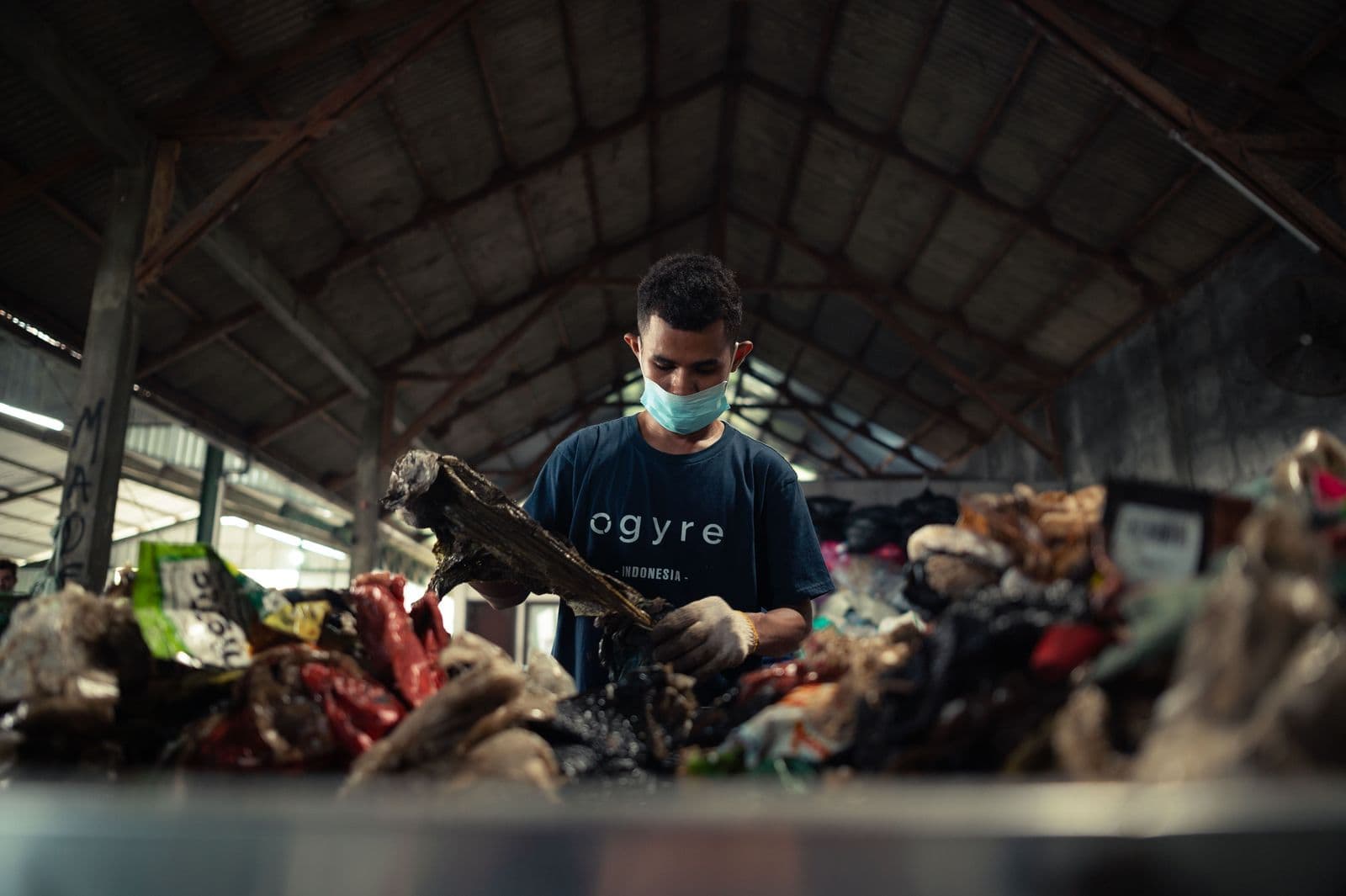
Why Ogyre is already compliant
Ogyre has already structured its communication and certification standards in compliance with Directive (EU) 2024/825, anticipating its requirements even before national transposition. For partners financing marine and coastal waste recovery campaigns, this means they can communicate their environmental commitment with full confidence under the new regulatory framework.
1.Generic environmental claims.
In particular, claims related to Ogyre’s collection campaigns are never generic: each campaign is quantified by objective, publicly available, and verifiable data—such as volumes of plastic collected, end-of-life destinations of materials, and geographic areas of intervention—providing clear and transparent evidence of the actual impact of the funded initiative.
2.Claims about future environmental performance.
Likewise, these claims do not refer to future performance: activities start immediately upon engagement, meaning the communicated commitment reflects an action already underway, rather than a goal to be achieved over time.
3.Sustainability labels and certifications.
As for sustainability labels, Ogyre’s certification system meets all regulatory requirements: it is open to all economic operators willing to comply, under transparent, fair, and non-discriminatory conditions; criteria have been developed in consultation with sector experts and international initiatives such as Plastic Footprint Network and Prevent Waste Alliance; procedures for non-compliance and label revocation are in place; and compliance monitoring is carried out by an independent third party, in line with applicable provisions.
Conclusion
The new European regulation marks a structural shift in how companies can communicate sustainability. Environmental claims can no longer be generic, implicit, or unverifiable: they must be specific, demonstrable, and comparable. This moves competition away from communication and toward actual performance, making transparency an operational requirement rather than an optional choice.
For businesses, this change goes beyond marketing and affects the entire value chain—from data collection and certification to communication with consumers. In this new context, the ability to demonstrate impact—rather than simply declare it—becomes the key factor distinguishing regulatory compliance from real market credibility.
References
European Commission. (2022). Commission staff working document: Impact assessment report accompanying the proposal for a directive on empowering consumers for the green transition (SWD(2022) 85 final). link
European Parliament and Council of the European Union. (2024). Directive (EU) 2024/825 of 28 February 2024 amending Directives 2005/29/EC and 2011/83/EU as regards empowering consumers for the green transition through better protection against unfair practices and through better information. link
Repubblica Italiana. (2026). Decreto legislativo 20 febbraio 2026, n. 30: Attuazione della direttiva (UE) 2024/825 del Parlamento europeo e del Consiglio, del 28 febbraio 2024, che modifica le direttive 2005/29/CE e 2011/83/UE per quanto riguarda la responsabilizzazione dei consumatori per la transizione verde mediante il miglioramento della tutela dalle pratiche sleali e dell’informazione (G.U. Serie Generale n. 56, 9 marzo 2026). link
![[object Object]](/_next/image?url=https%3A%2F%2Fogyre.fra1.cdn.digitaloceanspaces.com%2FDSC_5208%20(1)-compressed-1600x1065.jpg&w=3840&q=75)
![[object Object]](/_next/image?url=https%3A%2F%2Fogyre.fra1.cdn.digitaloceanspaces.com%2FOgyre%20-%20Wiliam%20Alves3843%20(1)-1600x1066.jpg&w=3840&q=75)
![[object Object]](/_next/image?url=https%3A%2F%2Fogyre.fra1.cdn.digitaloceanspaces.com%2Findo%20warehouse%20(1)-1600x1065.jpg&w=3840&q=75)