


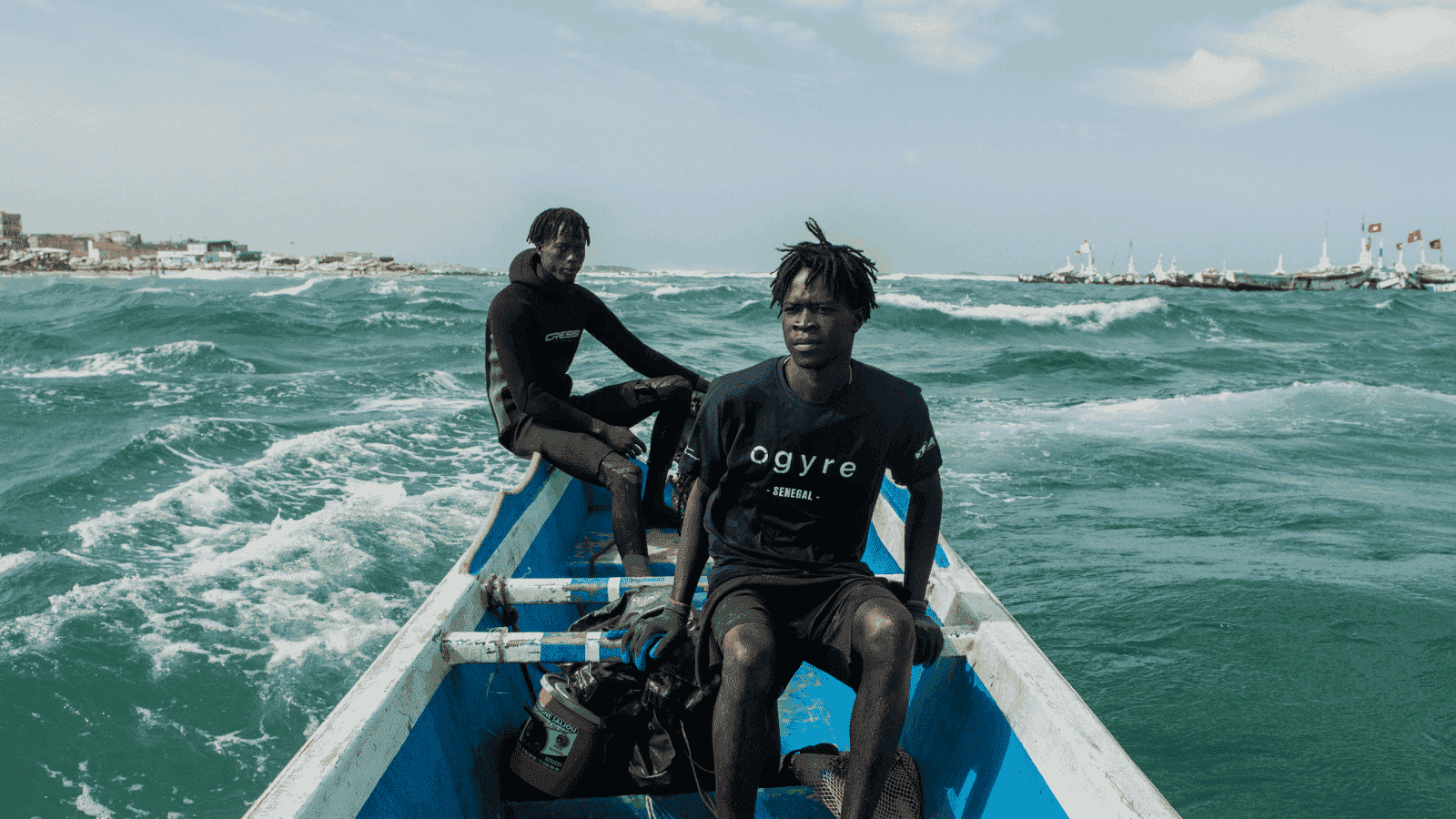
Marine litter in Dakar accumulates at Hann Bay and Yoff Ndenatte Beach; a new Ogyre hub collects, recovers and tracks ocean plastic.
Overview
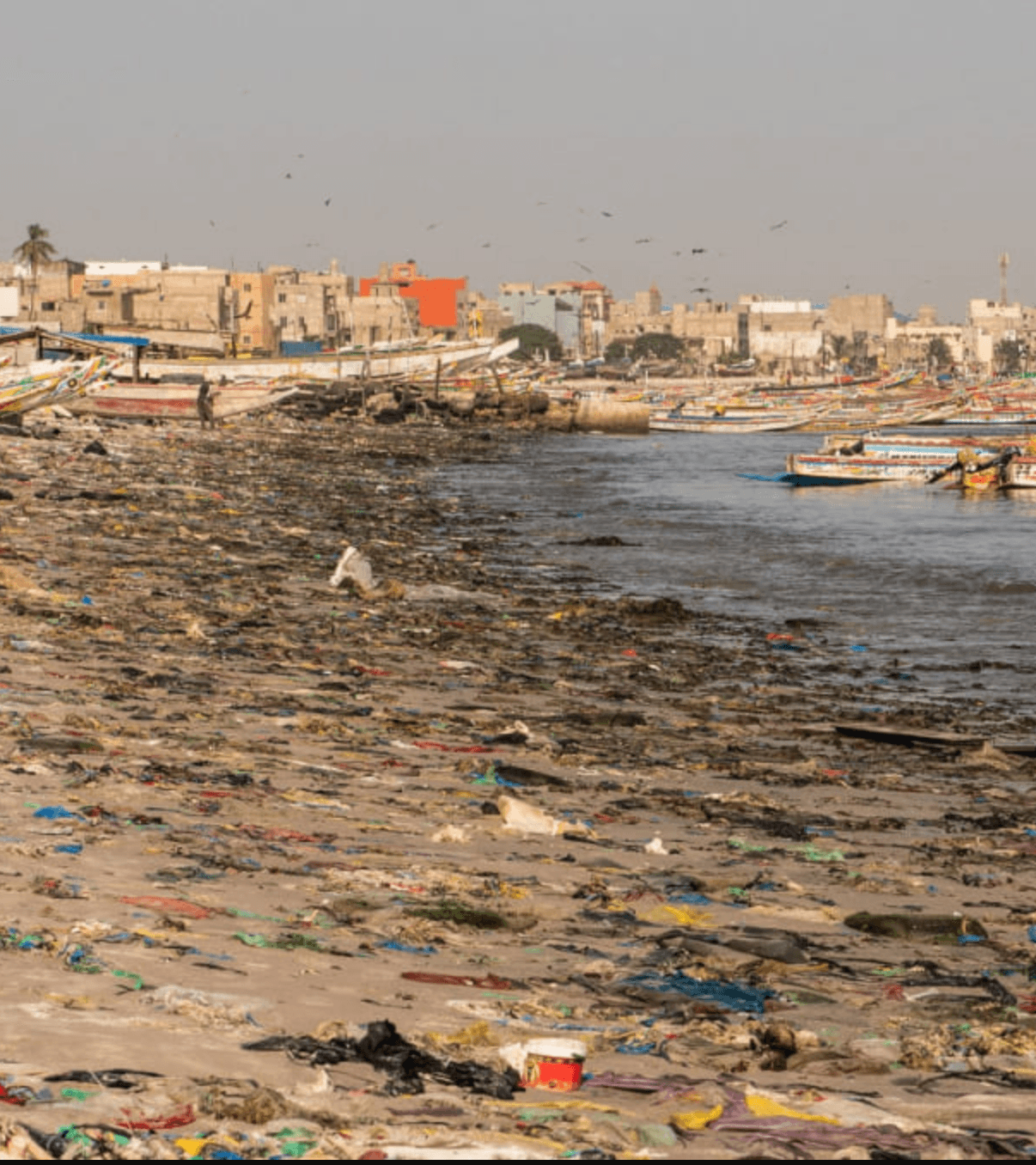
Dakar’s coastline shows marine litter pollution in a way that is hard to ignore: plastic bottles in the sand, mixed household waste trapped in the surf line, heavier objects snagged on the seabed. Local divers and residents describe the same trajectory across decades: beaches that used to feel “beautiful” now feel congested with waste, and nearshore fishing grounds have thinned out. A waste collection hub matters here because inputs are continuous—once waste enters the water, waves and currents redistribute it, then strand it again. That loop is why collection and recovery here must be regular, documented, and connected to real end-of-life routes.
Why Dakar
What the data suggests
Senegal’s plastic pressure is measurable. Last year, Senegal’s Plastic Overshoot Day was reported as 30 January 2025, meaning that the country’s waste system can handle roughly the first 30 days of the year—after that point, plastic waste generation exceeds management capacity, leading to environmental leakage. The 2025 country profile reports a Mismanaged Waste Index of 91.73%, with 173,645 tons of plastic expected to be mismanaged out of 189,305 tons of plastic generated. The same profile estimates releases of 1,657 tons of microplastics in waterways.
How waste builds up in Dakar
Senegal’s national indicators show how quickly plastic waste can exceed management capacity; Dakar concentrates that pressure and is commonly described as one of the most polluted areas in Senegal.
For a long time, waste services did not keep pace with rapid population growth. In practice, that meant fewer safe options for disposal at neighborhood level, and dumping on streets, beaches, and into the sea became a default outlet. Once waste enters the coastal system, the shoreline becomes a conveyor: rough seas pull litter into the water, and the next wave set strands it again along the surf line, compressing it into a visible band of debris.
The two main hotspots
Hann Bay and Yoff Ndenatte Beach are two places where this dynamic is especially evident.
- At Hann Bay, people describe waste arriving not only from local dumping and wastewater outlets, but also being moved and concentrated by coastal currents. A diver active in the area explains that currents coming from other coastal zones, such as Kayar, bring debris into the bay, adding external inputs to what is generated locally. Hann is also remembered as once being among the most beautiful beaches in West Africa; today the most immediate signal is often the surf line itself: litter that is repeatedly pulled in and stranded again. Hann bay is often described as among the most polluted in the world.
- At Yoff Ndenatte Beach, the main focus is the seabed: older waste does not stay floating forever. As it fills with water, gets covered in organic matter, or traps sand, it becomes heavier and sinks, then settles and accumulates out of sight. In the local testimonies, the underwater picture is described plainly: “on the seabed is a lot of waste,” including “tires, fishing nets… plastics.”
Where inflows are constant, one cleanup is not enough. What changes the trend is a system: recurring cleanups, recovery routes for what is collected, and a parallel cultural shift that reduces dumping at the source. Working locally also creates visibility and routine—people see collection happening, understand where waste should go, and become more accountable for keeping it out of beaches and marine environments.
How the Dakar hub works
In Dakar, recovery must work in two places at once: along shorelines, where waste is re-stranded and re-mobilized by surf, and on the seabed, where heavier items persist underwater and block habitats. The Ogyre hub in Dakar organizes recurring operations at Yoff Ndenatte Beach with certified divers, and in Hann Bay. The priority is to recycle everything that can be recycled with local partners, turning recovered plastics into objects with a second life. Traceability is treated as a constraint: each activity is recorded through a blockchain-enabled system to keep weights, locations, and batches auditable through the collection chain.
What progress looks like
This coastline will not change through one-off actions. It changes when pressure drops over time. Success can be read in simple signals: less debris building up on the seabed in repeat dive areas, less re-accumulation along the shore after rough seas, and a recovery chain that reliably moves material from collection to sorting, recycling, or responsible disposal—while awareness grows and local dumping becomes less routine. Over time, visible recovery can also increase pressure on institutions to upgrade waste services and infrastructure, enabling a more radical shift in how waste is managed across the city.
References
- Ogyre field interviews in Hann Bay and Yoff area, Ogyre (2026)
- Plastic Overshoot Day – Report 2025, EA-Earth Action (2025) link
![[object Object]](/_next/image?url=https%3A%2F%2Fogyre.fra1.cdn.digitaloceanspaces.com%2Fbrazil-2.jpg&w=3840&q=75)
![[object Object]](/_next/image?url=https%3A%2F%2Fogyre.fra1.cdn.digitaloceanspaces.com%2FCover_3%20(1)-1600x900.png&w=3840&q=75)
![[object Object]](/_next/image?url=https%3A%2F%2Fogyre.fra1.cdn.digitaloceanspaces.com%2FDSC_6751%20(1)-1-1600x1065.jpg&w=3840&q=75)