In Bali's Batu Lumbang mangrove forest, Ogyre uses kayaks to collect 8.5 tonnes of waste monthly from hard-to-reach waterways.
Overview
In Bali, Indonesia, the Batu Lumbang mangrove forest is a complex ecosystem where dense vegetation, narrow waterways, and accumulated waste make cleanup operations particularly challenging. Some areas are so difficult to access that conventional boats cannot navigate through them. To overcome these obstacles, Ogyre uses kayaks to collect waste trapped among mangrove roots, combining practical solutions with the protection of a fragile coastal environment.
Why mangroves are difficult to clean
Mangrove forests develop along tropical coastlines, where trees grow in shallow, often muddy waters. Their intricate root systems provide shelter and breeding grounds for fish, crustaceans, and other marine organisms, while also helping protect coastal areas from erosion.
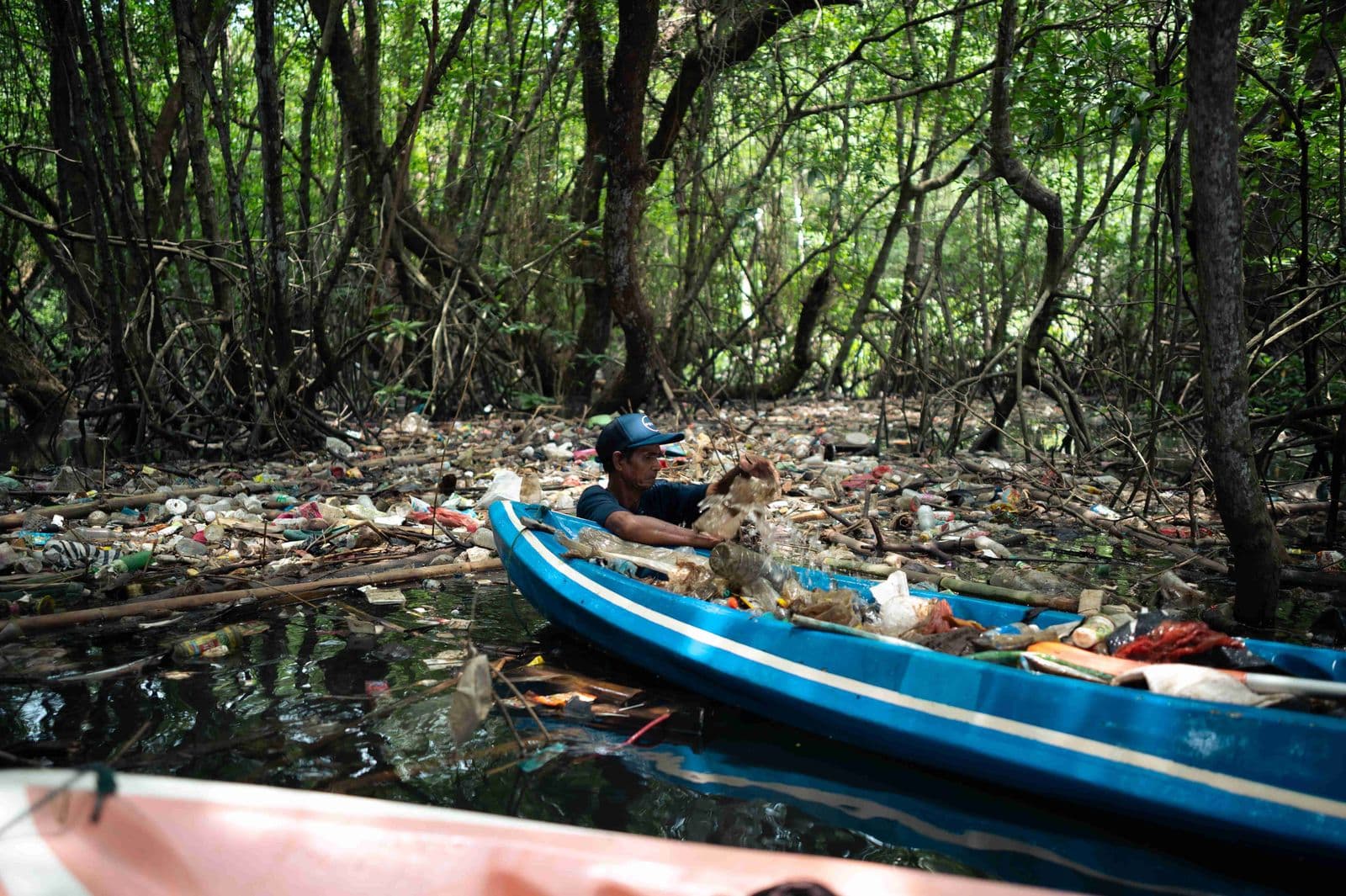
These same roots also act as natural barriers against marine pollution, trapping plastic bottles, packaging, bags, and other debris carried by tides and currents before they can reach the open Ocean. However, this protective function comes at a cost: as waste accumulates among the roots, it can obstruct water circulation, cover exposed roots, and limit oxygen exchange, putting the mangroves themselves under stress. In other words, the forest helps prevent waste from spreading into the Ocean, but risks being suffocated by the pollution it intercepts.
In Batu Lumbang, some sections of the forest are so densely vegetated that conventional boats cannot pass through. In other areas, floating plastic and accumulated debris make navigation even more difficult.
This creates a practical challenge: how can large quantities of waste be removed without damaging the ecosystem that needs protection?
Small kayaks, significant results
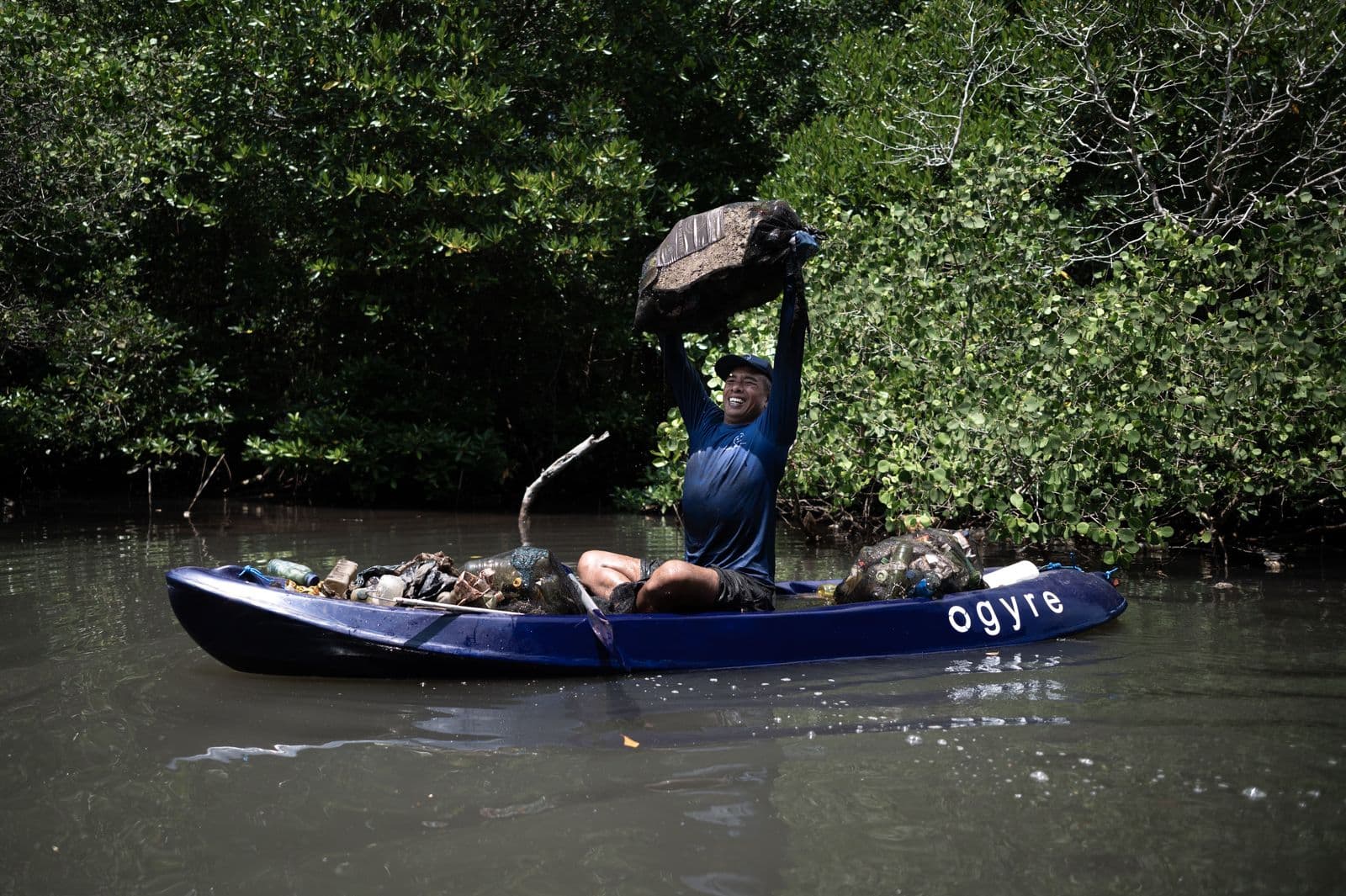
Ogyre's cleanup operations in Batu Lumbang rely on kayaks, whose compact size and manoeuvrability make them particularly suitable for navigating the mangrove forest.
Unlike larger boats, kayaks can move through narrow passages, reach shallow areas, and approach waste trapped between roots without requiring extensive space for navigation.
Their limited dimensions also allow collection teams to operate more precisely, reducing the risk of disturbing surrounding vegetation.
Despite their size, these kayaks can transport substantial quantities of recovered material.
Each kayak carries approximately 100 kg of waste per load, equivalent to 8–10 collection bags.
Once collected, the waste is transported out of the mangrove forest and transferred to the local waste management chain, where materials are sorted and directed towards recycling or responsible disposal.
The results demonstrate how a relatively simple tool can support operations at a meaningful scale.
- 2.1 tonnes of waste collected per week
- 8.5 tonnes of waste collected per month
- More than 8.5 hectares of mangrove forest cleaned
These figures reflect the project's operational capacity and the extent of the area addressed through collection activities.
Beyond waste collection
Cleanup activities in Batu Lumbang are contributing to a cleaner mangrove ecosystem, with encouraging signs of increasing biodiversity. Ecotourism activities have also developed in the area, creating opportunities for visitors to explore the forest and for local communities to benefit from its protection. The project shows how targeted waste recovery can support both ecosystem conservation and the sustainable use of coastal environments.
The importance of adaptability
Ogyre follows the same core model across its projects, but adapts its operations to local geography, environmental conditions, and community needs. In Batu Lumbang, kayaks make it possible to navigate dense mangrove forests. In Yoff, Senegal, where most of the waste lies on the seabed, fishers with diving certifications collect waste using rope systems to lift heavy objects such as tyres that would be impossible to bring to the surface manually. In Brazil's Guanabara Bay, where collection areas are far from the port, a custom-built towable raft allows fishers to transport larger quantities of waste in a single trip, reducing the need for repeated journeys. The objective remains the same, but the tools and methods change to make waste collection effective in each local context.